Power Flushing inWoolwich & Greenwich Sludge Out, Warranty In, Bills Down
A proper high-flow reverse flush that strips a decade of magnetite sludge out of your radiators and pipework, restoring flow, quieting the boiler, cutting gas bills, and unlocking manufacturer warranty on any new install.
Before-and-after Kamco flush report · MagnaClean filter fitted · Inhibitor dosed to Sentinel spec
The only defensible answer to a sludged system
You cannot chemical-clean your way out of ten years of magnetite. It has to be physically flushed out.
- What it is
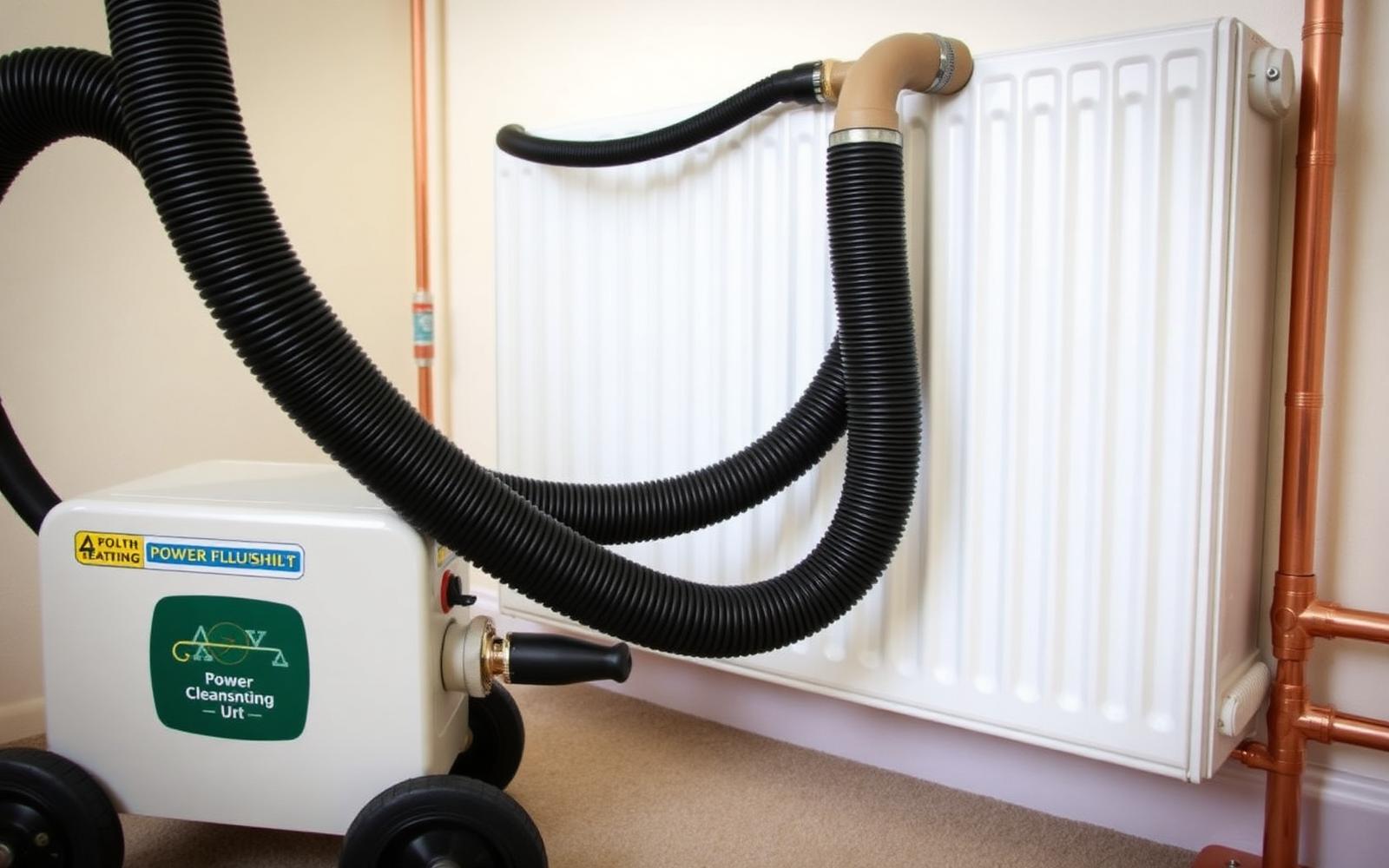
- Power flushing uses a purpose-built pump (Kamco Clearflow or similar) to circulate water and dedicated chemistry through your central heating at high flow rate, reversing direction periodically to dislodge and remove magnetite sludge, limescale and debris, then dose the system with inhibitor to keep it clean.
- Who it's for
- Anyone with cold-at-the-bottom radiators, black water on bleeding, boiler noise (kettling), repeated radiator upgrades that haven't fixed the problem, or a new boiler due to be installed on an older system.
- When you need it
- Before any new boiler installation on a system over 6–8 years old. Also whenever more than one radiator shows sludge symptoms, or when a system's inhibitor level tests low and the water is discoloured.
- Why a professional matters
- A power flush done badly damages more than it fixes. Wrong isolation, wrong chemistry or excessive pressure can burst radiators, blow expansion vessels and cause leaks in weakened joints. A proper flush is methodical, isolated, tested and recorded.
What sludge costs you every winter
Sludge grows silently and expensively. By the time you can feel it, it's already cost you a boiler.
Voided boiler warranty
Every major manufacturer requires system water to meet BS 7593 chemistry. Sludge kills that within a season and voids your warranty on the next fault.
Boiler heat exchanger failure
Sludge collects in the primary heat exchanger. Cracked exchangers routinely cost £900+ in parts alone and are often uneconomic to fit.
Cold radiators, higher bills
A single sludged radiator forces the boiler to work harder, gas consumption rises 15–25% for the same delivered heat.
Pinhole leaks in radiators
Untreated magnetite sits, oxidises the radiator steel from inside, and pinholes appear, usually on a Sunday, usually mid-winter.
Common mistakes we fix
- Adding cleaner to the system and calling that a 'flush'
- Flushing without isolating the boiler heat exchanger, damages the boiler
- Not fitting a MagnaClean afterwards, magnetite comes back
- Skipping the inhibitor dose on completion
- Buying a new boiler without flushing the system first (warranty invalidated)
From your first call to the completion certificate.
- 1
System survey
Water sample tested for iron and inhibitor, radiators checked, boiler and pump condition assessed to confirm powerflush is safe.
- 2
Isolation & chemistry
Boiler heat exchanger isolated where required, Sentinel X400 sludge remover circulated at temperature to loosen deposits.
- 3
High-flow reverse flush
Kamco Clearflow pump connected across the flow and return, each radiator individually agitated and flushed in both directions.
- 4
Rinse & dose
System rinsed to clean-water clarity, water sample re-tested, Sentinel X100 inhibitor dosed and MagnaClean Pro2 filter fitted to the return.
- 5
Sign-off report
Written before/after report with water samples for your records, protects new boiler warranty and satisfies manufacturer terms.
What you actually get for the money.
Restores radiator heat output
Rads that ran cold at the bottom heat evenly again, often within a single heating cycle.
Protects new boiler warranty
BS 7593-compliant water is a warranty condition. A flushed and dosed system keeps your cover intact.
Lower gas bills
A clean system typically reduces gas usage 15–25% versus the same boiler on a sludged circuit.
Quieter boiler and pump
Kettling disappears, pump noise drops, radiators stop clunking.
Longer system life
Radiators cleaned properly can add another 10 years to their service life.
Sludge stays gone
MagnaClean filter catches any residual magnetite; annual inhibitor top-up keeps chemistry right.
How we actually flush a heating system
There are two versions of 'power flushing' in the trade. This is the proper one.
Kamco Clearflow methodology
We use a Kamco Clearflow SmartPump connected across the flow and return of the system with dedicated dump valves. Flow rate exceeds 150 l/min, well above what the household pump can achieve. Direction is reversed automatically every few minutes.
Chemistry
Sentinel X400 sludge remover, X800 for limescale-heavy areas, X100 inhibitor on completion. Chemistry dwells at temperature between 60°C and 80°C to maximise dispersion.
Radiator agitation
Each radiator is individually agitated using a percussive tool at the base to dislodge settled magnetite, then flushed forwards and backwards until run-off is clear. This is where DIY flush kits fail, they can't move settled sludge.
Boiler protection
Modern condensing boilers with narrow-bore heat exchangers are isolated from the flush loop where the manufacturer requires it, and flushed separately using a lower-pressure protocol. Skipping this can wreck a heat exchanger.
Water sampling
Before/after samples in labelled bottles, iron content, TDS, and inhibitor level compared. Left with you as proof of work and warranty evidence.
When a flush isn't enough
Systems with rotted radiator internals or leaking pinholes need replacement radiators alongside the flush. We'll tell you upfront if that's the case rather than flush and hope.
Questions we hear every week.
How much does a power flush cost?+
£450–£650 for a standard 8–10 radiator system in SE London, including chemistry, MagnaClean filter and inhibitor. Larger systems priced per radiator over 10.
How long does a power flush take?+
6–8 hours for a typical family home. Larger or heavily sludged systems can take a full day.
Do I need a power flush with a new boiler?+
If your existing system is 8+ years old, yes, and the boiler manufacturer requires it. Skipping is the top cause of rejected warranty claims.
How can I tell if my system needs flushing?+
Cold-at-the-bottom radiators, black water on bleeding, boiler kettling, repeated pressure loss, and unusually high bills all point to sludge.
How often should a system be flushed?+
Chemical clean and inhibitor top-up annually. Full power flush every 5–7 years, or before a new boiler if not done in that window.
Will it fix my cold radiator immediately?+
Usually yes, most sludged radiators heat evenly by the end of the visit. Very badly rotted radiators may need replacing alongside the flush.
Is a power flush safe on old pipework?+
On sound systems yes. On very old iron pipework we'll survey first and may recommend chemical clean + MagnaClean instead to avoid disturbing weak joints.
Do you fit a filter afterwards?+
Yes: MagnaClean Pro2 on the return as standard, keeps residual magnetite out of the boiler for good.

Ready to get power flushing sorted properly?
Speak to Danny directly. Free quote in writing, honest advice, and a fair fixed price. No sales pressure, we’ve been at this for over 30 years for a reason.
- Gas Safe registered #180521
- 4.9★ from 159 Google reviews
- Office 9am–9pm, 7 days a week
- Based in Greenwich · covers all SE London